
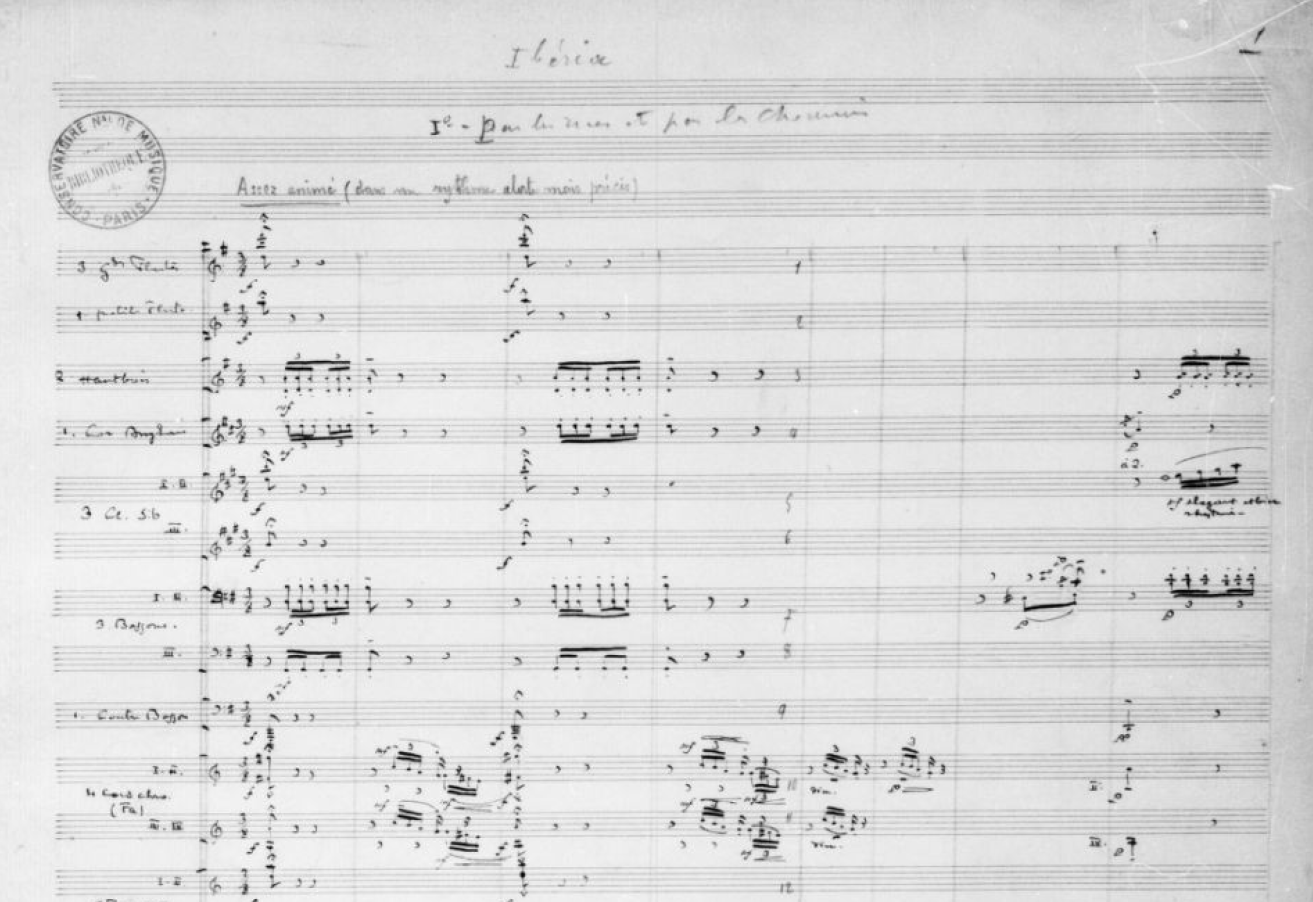
“Iberia”. Complete edition of the percussion parts. “Iberia”, by Claude Debussy, is the second piece in his orchestral triptych “Images pour Orchestre”, written between 1905 and 1908. A colorful piece on how he imagined Spain, a country he visited only for a couple of hours in 1880 when he was 18. The parts present mistakes… Continue reading “Iberia”. Complete edition of the percussion parts

Tag: xylophone
“Alborada del Gracioso”. Complete edition of the percussion parts
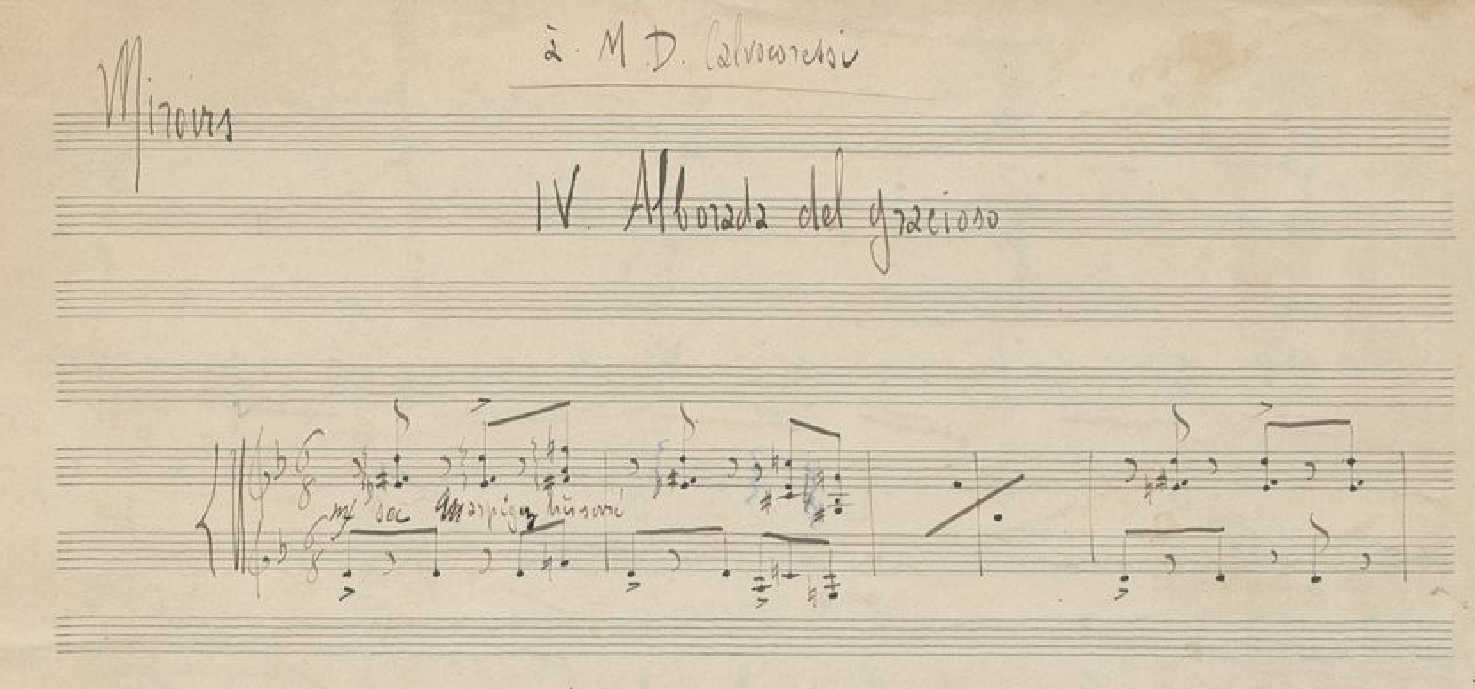
“Alborada del gracioso”. Complete edition of the percussion parts. “Alborada del gracioso”, by Maurice Ravel, started as the fourth number in his piano suite “Miroirs”. It was writen between 1904 and 1905 and, at the request of Diáguilev, it was orchestrated in 1918, becoming since then a staple in the symphonic repertoire. It is a… Continue reading “Alborada del Gracioso”. Complete edition of the percussion parts
“Rapsodie Espagnole”, by Ravel

“Rapsodie Espagnole”, by Ravel. “Rapsodie Espagnole“, by Ravel, is not only an important work in the symphonic repertoire; it also features wonderfully written percussion parts. Sadly, both the score and the particelle are plaged with numerous mistakes and missprints that the first edition has perpetuated in many performances and recordings. Because I played this work… Continue reading “Rapsodie Espagnole”, by Ravel
“Xilofono basso” in “Turandot” (G. Puccini) – (and II?)

“Xilofono basso” in “Turandot” (G. Puccini) – (and II?). In my PREVIOUS ARTICLE I showed you which instrument wanted Puccini as the “xilofono basso”, where he found his inspiration, who provided him with he original instrument and how he ordered a copy to be made for “Turandot”. Just imagine that we could find that original… Continue reading “Xilofono basso” in “Turandot” (G. Puccini) – (and II?)
“Xilofono basso” in “Turandot” (G. Puccini).

“Xilofono basso” in “Turandot” (G. Puccini). “Turandot”, by Giaccomo Puccini, is scored for timpani, snare drum, bass drum, cymbals, tam-tam, tubular bells, glockenspiel (keyboard), tuned gongs (the same as in “Madama Butterfly”), triangle, xylophone and bass xylophone in the pit; a tam-tam and a temple block onstage. I will write about the tuned gongs in… Continue reading “Xilofono basso” in “Turandot” (G. Puccini).
Xylophone in Richard Strauss´ “Salome”

Xylophone in Richard Strauss´ “Salome”. We, percussionists, very often play on instruments that, in reality, are not those that the composer indicated. We have the keyboard xylophone in “Bluebeard“ (B. Bartok), a part impossible to play on a regular xylophone; the glockenspiel parts in many works (“Magic Flute”, Mahler #7, «Daphnis et Chloe», etc.), which… Continue reading Xylophone in Richard Strauss´ “Salome”
“Bluebeard´s Castle” – Xylophone.

“Bluebeard´s Castle” – Xylophone This month, the Asturias Symphony Orchestra is playing Béla Bartók´s opera “Bluebeard´s Castle”. This work features one of the most unusual and difficult xylophone parts in the repertoire, and this article will deal with this particular issue. “Barbe Bleue”. Ilustration by Gustav Doré for “Les Contes de Perrault”. Paris, Jules Hetzel,… Continue reading “Bluebeard´s Castle” – Xylophone.