

The tenor drum, that great unknown. The tenor drum is an instrument not very well known; even seasoned percussionists mistake it for the military drum, another member of the percusive family. This article will define its characteristics and make clear what instrument it is. At first I thought that this article would make not much sense… Continue reading The tenor drum, that great unknown

Tag: percusizeme
The Provençal drum

The Provençal drum. Today´s article deals with a traditional instrument that has made its way into the symphony orchestra. Common to different drumming traditions from several countries and around five centuries old, its name in French is very similar to the way that other completely different instruments are named in other nations, which has caused… Continue reading The Provençal drum
“Bluebeard´s Castle” – Xylophone.

“Bluebeard´s Castle” – Xylophone This month, the Asturias Symphony Orchestra is playing Béla Bartók´s opera “Bluebeard´s Castle”. This work features one of the most unusual and difficult xylophone parts in the repertoire, and this article will deal with this particular issue. “Barbe Bleue”. Ilustration by Gustav Doré for “Les Contes de Perrault”. Paris, Jules Hetzel,… Continue reading “Bluebeard´s Castle” – Xylophone.
Various stickings for “Scheherezade”.

Various stickings for “Scheherezade” Sometime ago I showed you a one-handed way to play the third movement of “Scheherezade”. That article was “Snare drum technique. One-handed Scheherezade”. © Grover Pro Percussion After recording that video I tried a few stickings to play that excerpt. You can see the result here: https://www.youtube.com/watch?v=lryhSytw26g These are the different… Continue reading Various stickings for “Scheherezade”.
Snare drum technique. One-handed “Scheherezade”

Snare drum technique. One-handed “Scheherezade” Some weeks ago I saw an interesting video by Tony Ames (principal percussion with the National Symphony Orchestra) on which he can be seen playing the famous snare drum excerpt from the third movement of “Scheherezade” (N. Rimsky-korsakov) using just one hand. You know that I always try anything that leads… Continue reading Snare drum technique. One-handed “Scheherezade”
Snare drum technique. The roll.

Snare drum technique. The roll The roll is, probably, the most characteristic and idiomatic of all of the snare drum techniques. Isolately played on a snare drum, a 64th-note lasts exactly the same as a whole note. Because percussionists do not have an air column or a bow allowing us to play long notes on a… Continue reading Snare drum technique. The roll.
In memoriam David Searcy

In memoriam David Searcy. Sadly, I am writing again mourning a loss. David Searcy has passed away on August, 2nd. David was timpanist for the orchestra of Teatro alla Scala in Milan (before that, he played for the Bergen Philharmonic), a magnificent musician, and an excellent person. He was also a faculty member at the Royal… Continue reading In memoriam David Searcy
Editing timpani parts (and III)
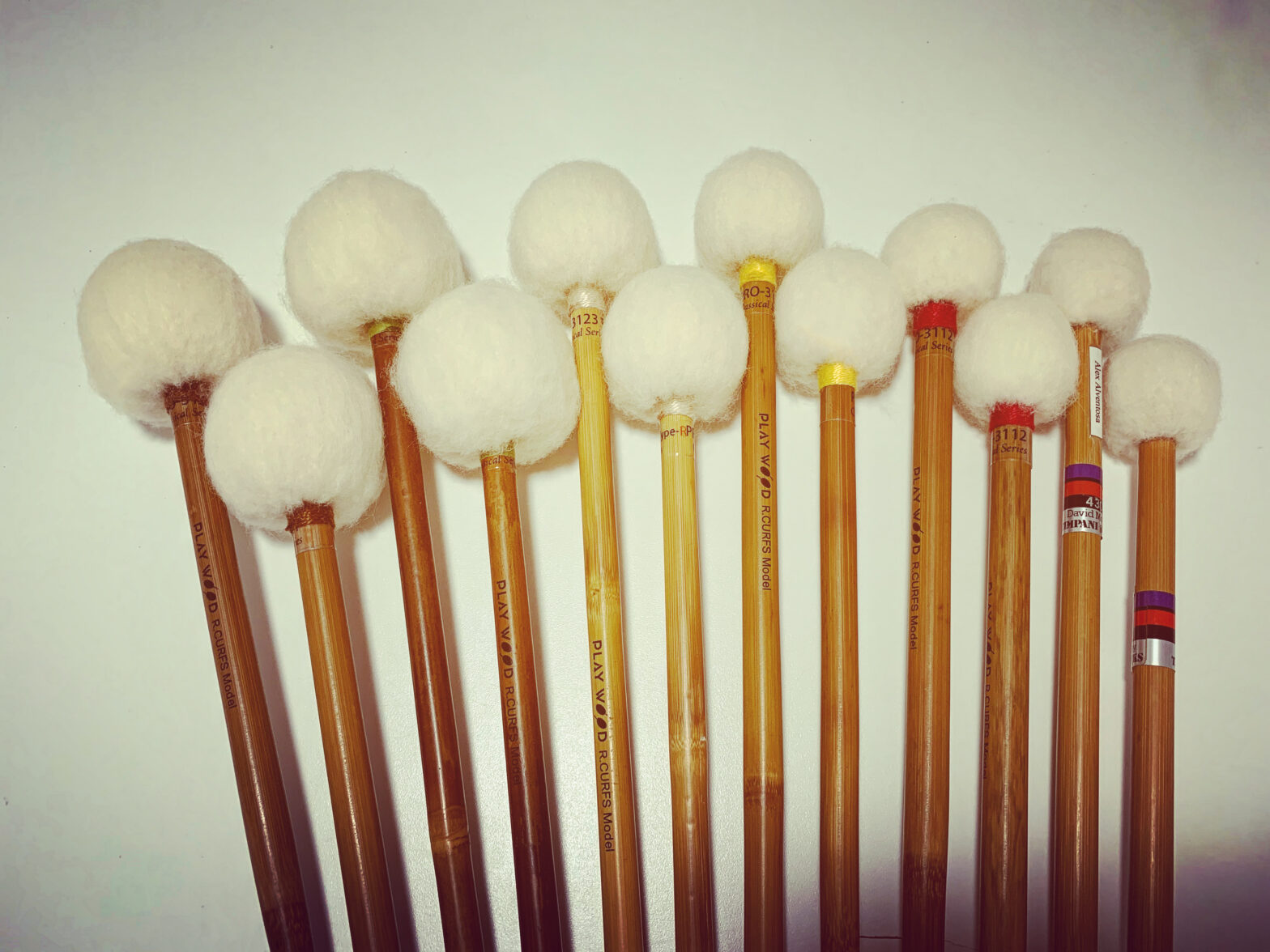
Editing timpani parts (and III). In this last article on the series I have wanted to use examples from Verdi himself to prove my points when editing the timpani part of his “Requiem“. It is not my intention when quoting the composer to fall into an “ad verecundiam” fallacy; by showing examples of his writing… Continue reading Editing timpani parts (and III)
Editing timpani parts (II)

Editing timpani parts (II). Continuing with the issue that we previously discussed, I´d like to show you my version of the “Sanctus” from Verdi´s “Requiem”. The use of full range speakers or headphones is highly recommended. You can legally and freely download the score and the parts here: IMSLP. © David Valdés This… Continue reading Editing timpani parts (II)
Editing timpani parts (I)

Editing timpani parts (I). He who has ever played repertoire by Mendelssohn, Schubert, Dvorak, Schumann, Tchaikovsky, Weber, Gounod, opera (mainly Italian and French works) and, as a particular case, Spanish zarzuela, is very likely to have found on many occasions notes that do not “match” with the harmonic/melodic context and, depending on his audacity or… Continue reading Editing timpani parts (I)