
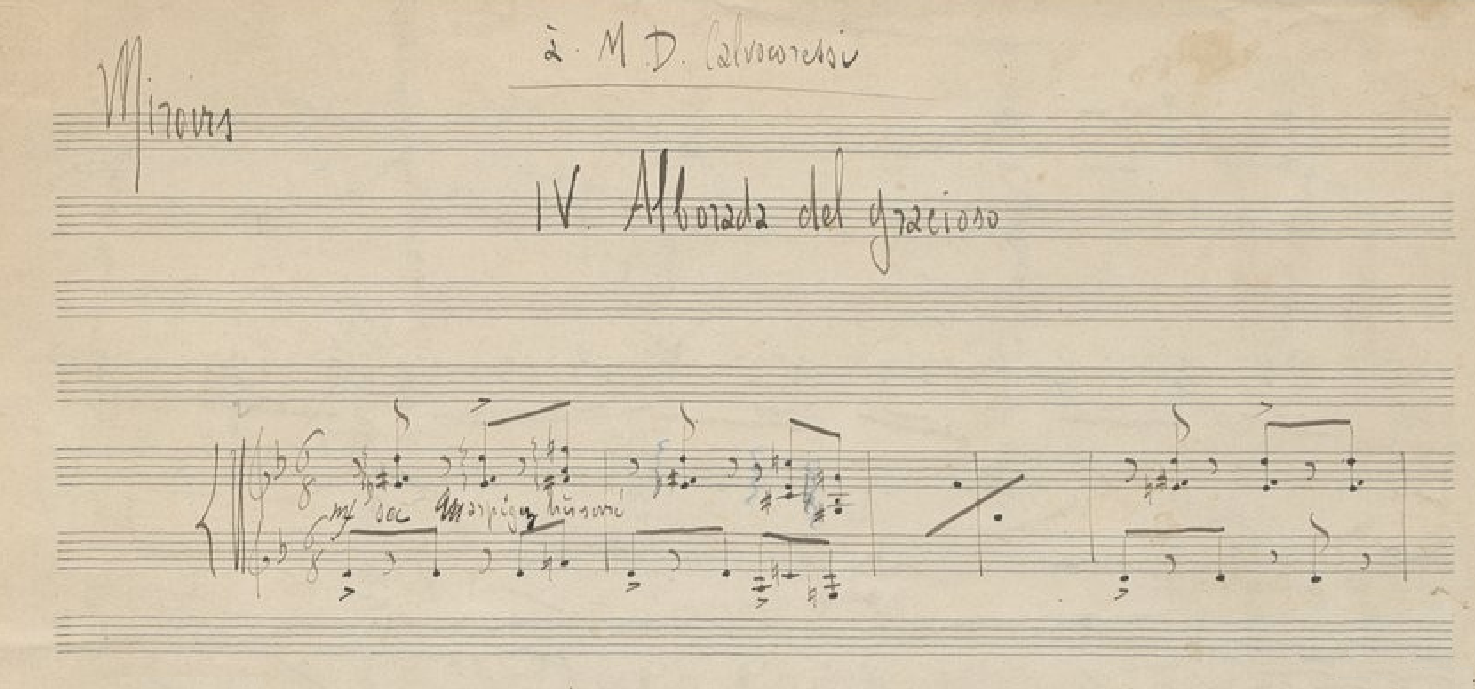
“Alborada del gracioso”. Complete edition of the percussion parts. “Alborada del gracioso”, by Maurice Ravel, started as the fourth number in his piano suite “Miroirs”. It was writen between 1904 and 1905 and, at the request of Diáguilev, it was orchestrated in 1918, becoming since then a staple in the symphonic repertoire. It is a… Continue reading “Alborada del Gracioso”. Complete edition of the percussion parts

Author: DavidValdes
“Nights in the gardens of Spain” – Complete edition
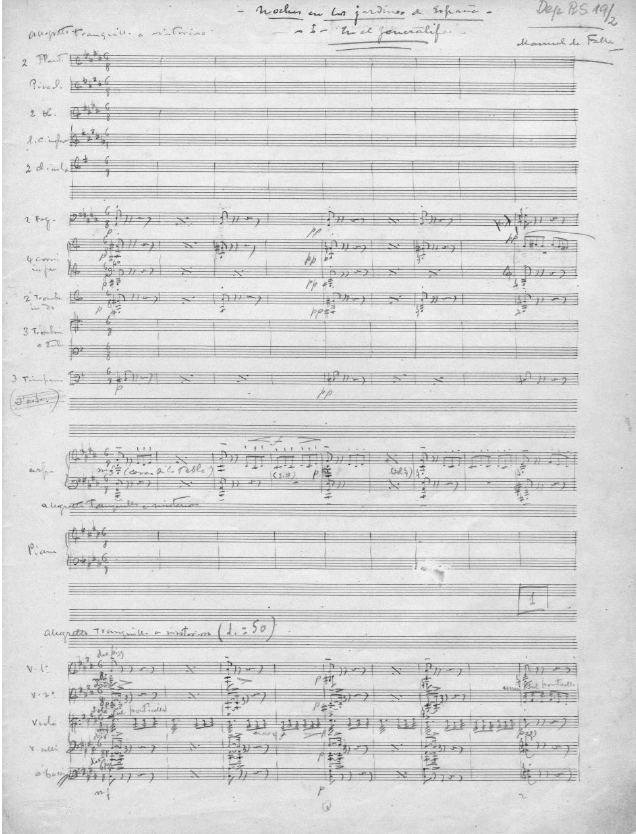
“Nights in the Gardens of Spain” – Complete edition Being 2026 the 150th anniversary of Manuel de Falla, his works are played even more than usual. Thanks to that important event, it is the second time this year that I play his wonderful “Nights in the Gardens of Spain”. The first time was last April,… Continue reading “Nights in the gardens of Spain” – Complete edition
The “mailloche”
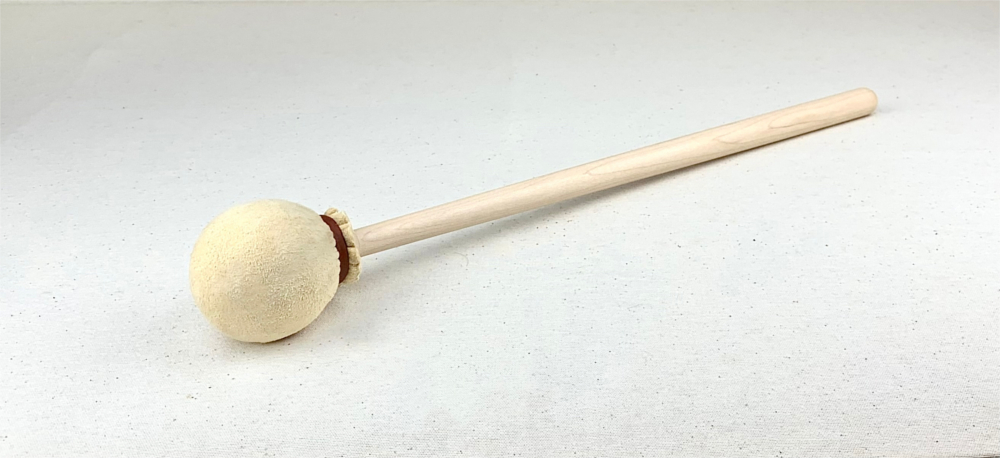
The “mailloche” If you have played French repertoire, chances of you having found the indication “mailloche” are very high. Altough the actual tendency is to not use a great variety of sticks on the bass drum, it is good to know what a mailloche is to enrich our tool arsenal, thus our expressive, timbrical and… Continue reading The “mailloche”
“Nights in the Gardens of Spain” – Timpani
“Nights in the Gardens of Spain” – Timpani “Nights in the Gardens of Spain”, by Manuel de Falla, started as a series of solo piano nocturnes in 1909 but, encouraged by Ricardo Viñes, don Manuel converted them into a work for piano solo and orchestra. It was finished in 1915, the premiere taking place on… Continue reading “Nights in the Gardens of Spain” – Timpani
Soprano timpano in “Mlada” (Rimsky-Korsakov)

Soprano timpano in «Mlada» (Rimsky-Korsakov). «Mlada» is an opera-ballet by Rimsky-Korsakov written between 1899 and 1890 and premiered in 1892. It is hardly played nowadays, but the composer converted the third act into a tone poem named “A Night on Mount Triglav” which, again, is hardly played, but it is performed slightly more often (just… Continue reading Soprano timpano in “Mlada” (Rimsky-Korsakov)
“V” for “Victory”

“V” for “Victory” In 1941, just one year and four months after the outbreak of World War 2 and still another your years ahead before it concluded (1945), the Belgian politician exiled in London Victor de Laveleye was in charge of the broadcasts for the German-occupied Belgium. While working for the BBC, he had… Continue reading “V” for “Victory”
A mistake in the tambourine part in “Trepak”

A mistake in the tambourine part in “Trepak” We are deep into “The Nutcracker” (P. I. Tchaikovsky) season. This ballet is a tremendously popular work that is played very often during Christmas. The percussion parts are great and the “Trepak” features a very funny part, which is also technical challenge, and that is why it… Continue reading A mistake in the tambourine part in “Trepak”
Timpani in Mendelssohn´s “Italian” symphony

Timpani in Mendelssohn´s “Italian” symphony Felix Mendelssohn wrote his Symphony No. 4 in A major, op. 90 (“Italian”) between 1832 and 1833 after a “Grand Tour” that took him to Italy between 1830 and 1831. It is the fourth symphony in his catalogue, but the third one in chronological order of composition. Again, the… Continue reading Timpani in Mendelssohn´s “Italian” symphony
Timpani in Mendelssohn´s “Scottish” symphony

Timpani in Mendelssohn´s “Scottish” symphony Felix Mendelssohn started composing his Symphony No. 3 in A minor, op. 56 (“Scottish”) in 1829 after a trip to Scotland (which also inspired him to write the overture “The Hebrides”), but the symphony was abandoned for more than a decade and it was completed between 1841 and 1842. It… Continue reading Timpani in Mendelssohn´s “Scottish” symphony
Glissando bass drum in “Momente” (K. Stockhausen)

Glissando bass drum in “Momente” (K. Stockhausen) Karlheinz Stockhausen ´s “Momente” includes a very unusual drum: “DERI glissando drum”. © Karlheinz Stockhausen DERI has not a meaning in German; it is the acronym of DEibel and RImmel, as Max Deibel and Karl Rimmel were the founders of this brand. Karl Rimmel started with a… Continue reading Glissando bass drum in “Momente” (K. Stockhausen)