Felix Mendelssohn started composing his Symphony No. 3 in A minor, op. 56 (“Scottish”) in 1829 after a trip to Scotland (which also inspired him to write the overture “The Hebrides”), but the symphony was abandoned for more than a decade and it was completed between 1841 and 1842. It is the third in his catalogue but, in fact, it is his fifth in a chronological composing order. It was his last symphony.
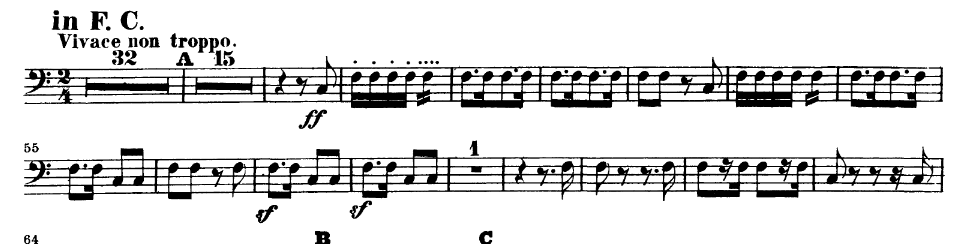
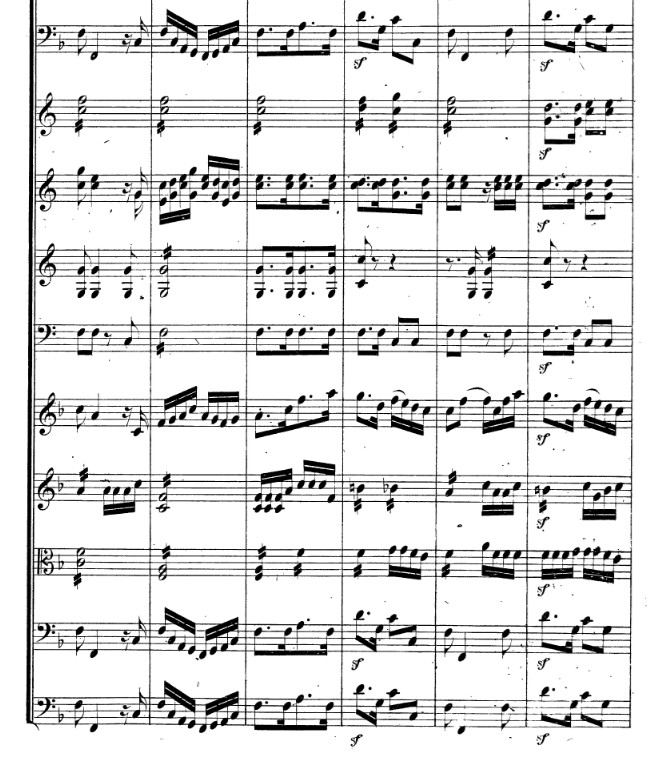
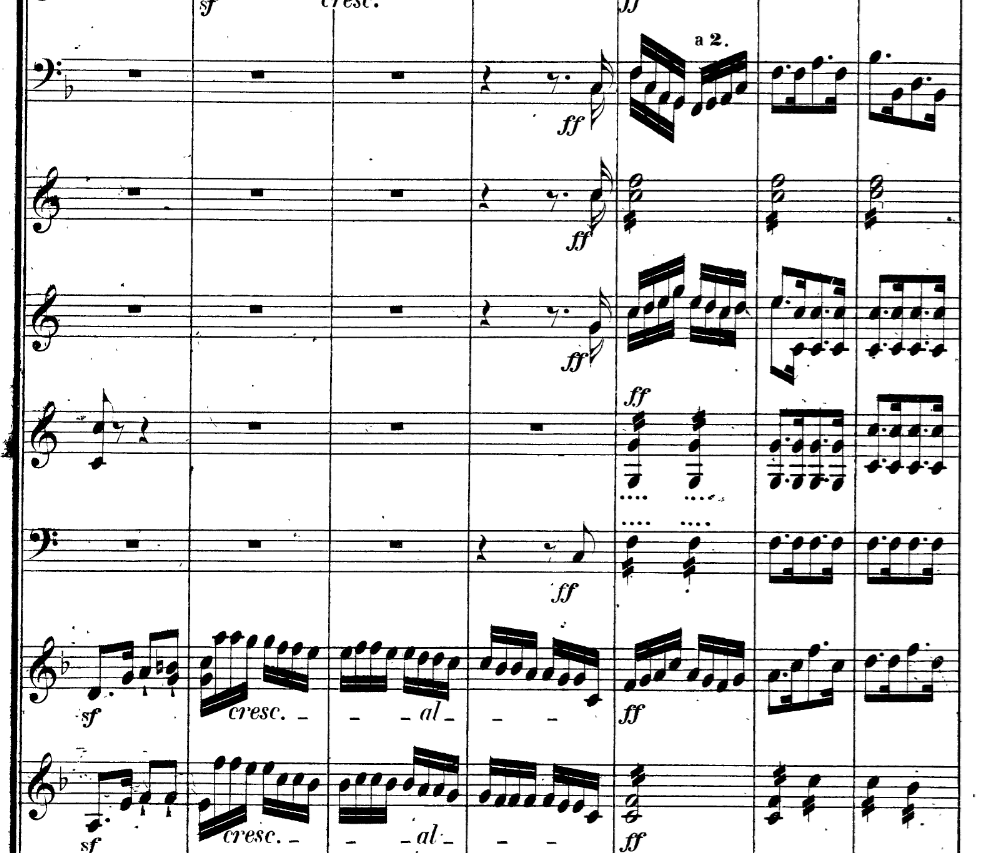
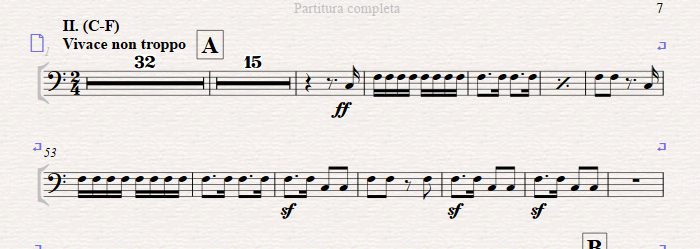
It features a wonderful timpani part, but its writing could make us think that several passages are “mistakes” that do not fit correctly with the rest of the orchestra or do not match the thematic and compositional elements. I am referring, mainly, to the first entrance in the second movement (Vivace non troppo), where we play the main theme together with the bassoons, French horns, first violins, celli and basses:
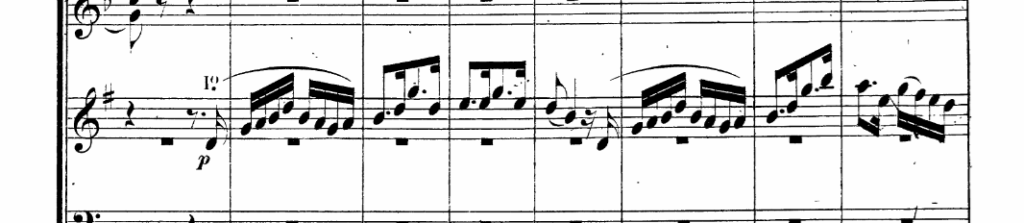
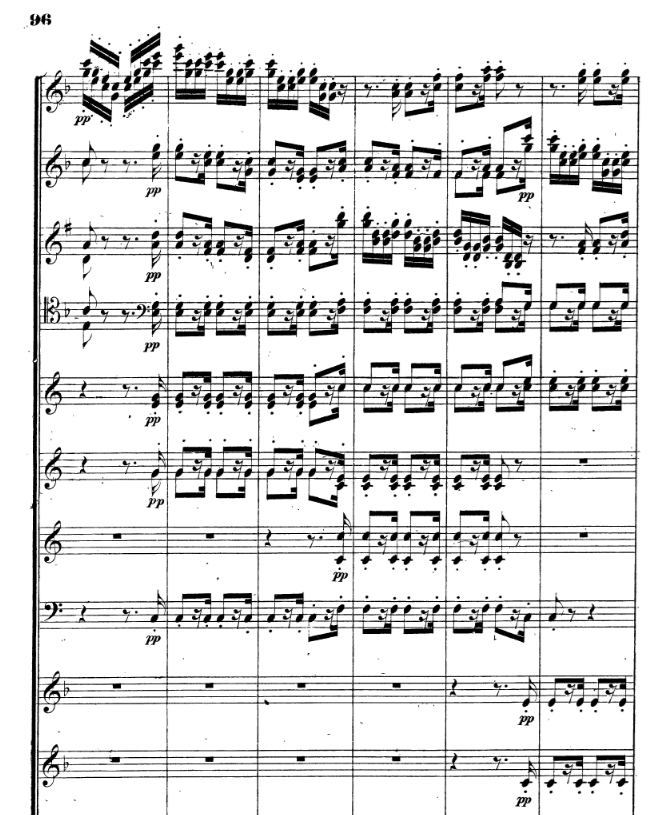
See that the pick-up is an eighth-note, and there is where I suspect that we have a problem. That phrase is the main theme of the movement, and it ALWAYS features a sixteenth-note pick-up. Here is the clarinet right at the beggining:
A 4 bars+4 bars phrase, each of the semiphrases starting with a sixteenth-note pick-up.
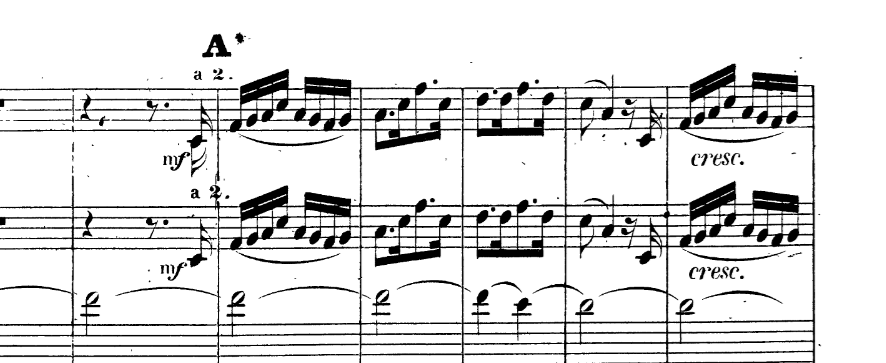
That eight-bars phrase is thematic, and it is repeated and developed throughout the whole movement. Here it is played by the flutes:
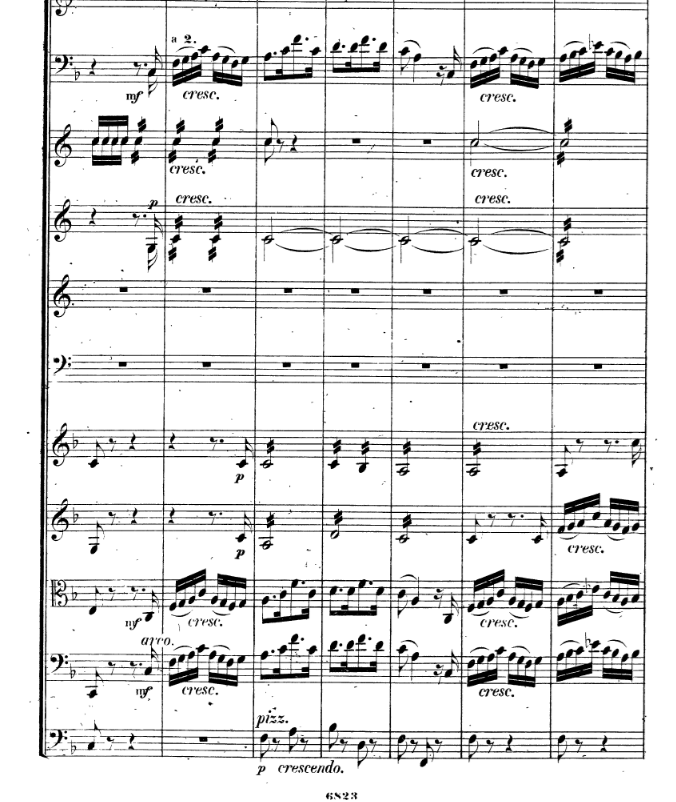
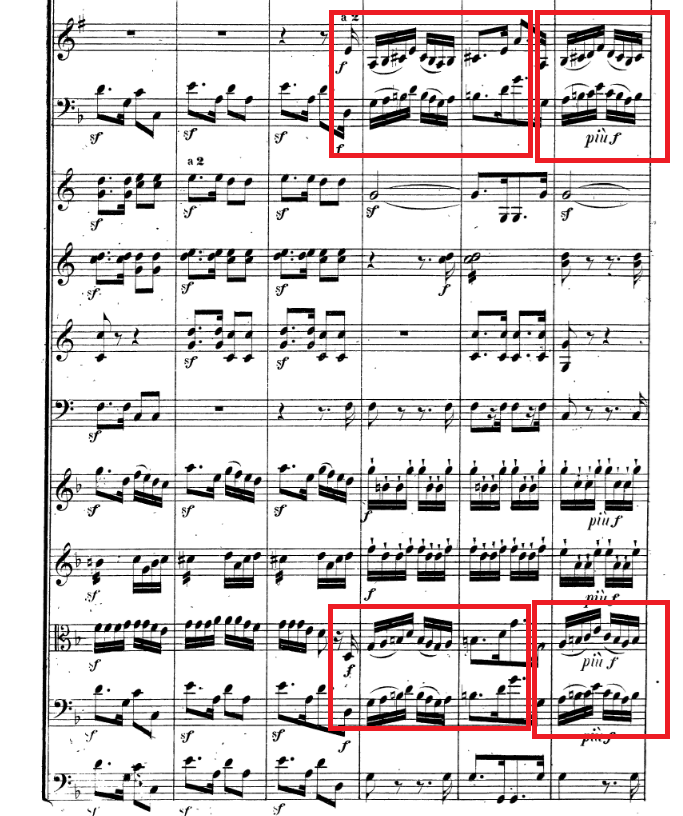
Now by the bassoons, violas and celli:
Now the bassoons, violins, celli and basses.
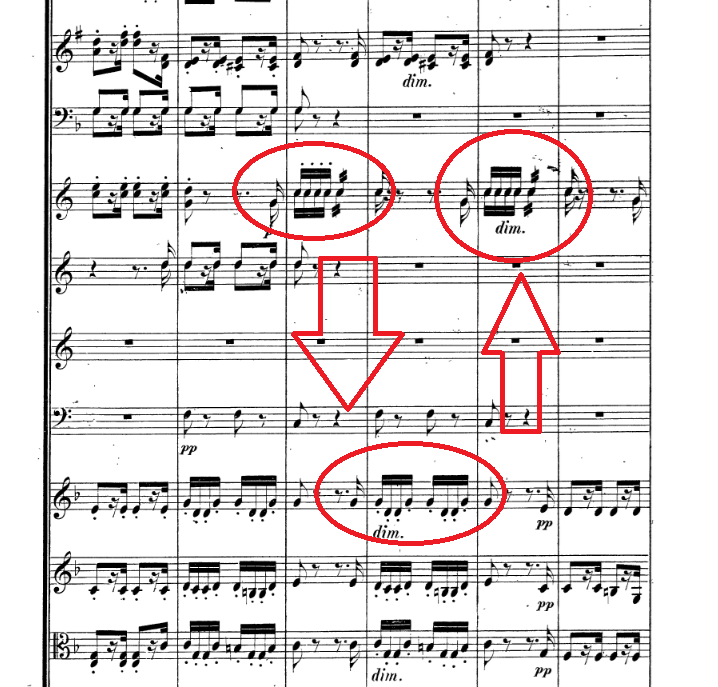
Here, a rhythmical dialogue is stablish using the “head” of the theme.
At this point, the first two notes of the theme are used to create a new rhytmhical phrase.
On this passage, only the first two bars of the theme are used, a development by shortening and repetition.
As you can see, the theme is crystal clear, and it ALWAYS features a sixteenth-note pick-up both in the first and fifth bars. The problem I see is that the timpani are playing the main theme together with bassoons, French horns, fist violins, celli and basses while the part features eighth-note pick-ups, which “destroy” the thematic consistency:
That eighth-note pick up, apart from making no sense from a thematic/compositional point of view, sounds awful, as we are not playing together with the rest of the orchestra, giving the impression that we are playing incorrectly. Rhythmicaly and thematicaly we are destroying the presentation of the theme because we are not exactly playing the same motive as the instruments that we are doubling.
Trying to find an answer, I have studied all the available editions of the orchestral score: the first one by Breitkopf & Härtel (1842), the 1877 reprint by Kalmus, the reprint by Dover, the 1910 August Kranz edition… All of them show the pick-up in the timpani part as an eighth-note.
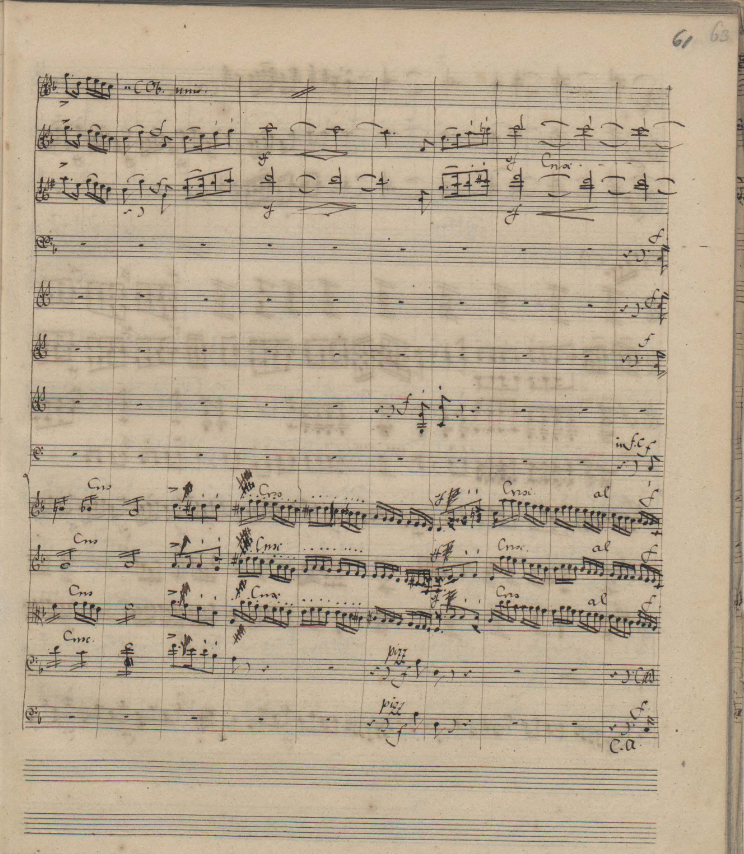
Determined to solve this issue, I got to the manuscript. We can see, on page 63, the beginning of the theme when played by the timpani. It coincides with a page turn:
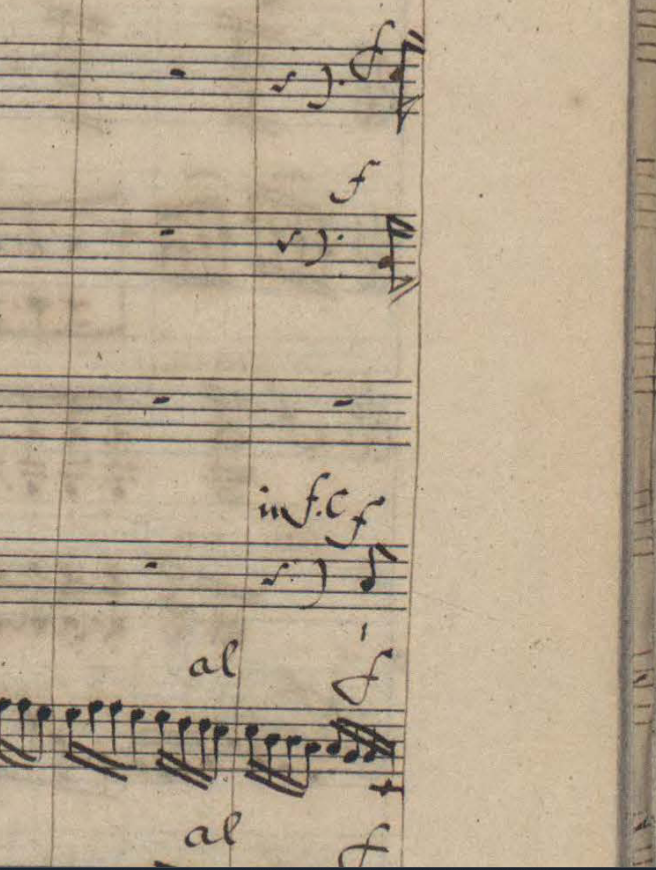
Let us zoom in so we can see it better:
The manuscript is crystal clear: the timpani, and only the timpani, start the phrase with an eighth-note pick-up instead of the sixteenth-note featured by the rest of the instruments.
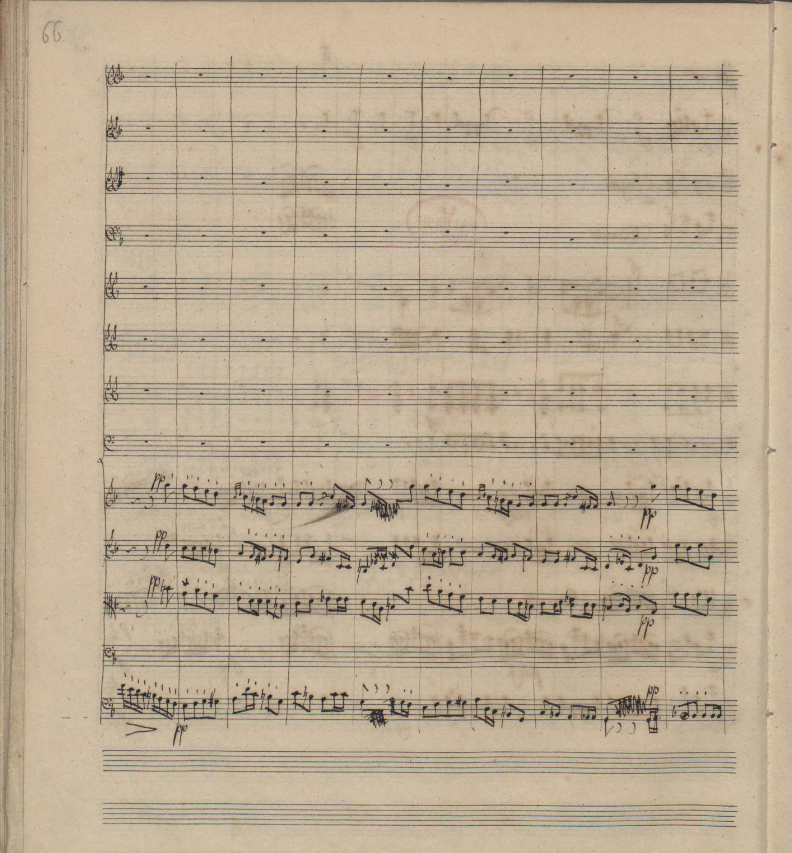
But there is a problem… After that mentioned page turn, the manuscript jumps to page 66 (that means that pages 64 and 65 are missing -and they truly are, as I have checked the whole document-), so it is impossible to check the thematic eight-bars phrase (it would be great if we could see the beginning of the second semiphrase, the pick-up to bar five, as it is a repetition of the first one).
Yes, the writing is clear but, to me, it is an obvious mistake, as it does not match the thematic material. That small difference makes, to me, the timpani part to sound wrong and out of place.
We must know that Mendelssohn was very fickle, made constant changes and that it was very hard for him to get to a definitive and stablished final version of his works (I strongly recommend reading THIS article). Also, one just have to check the manuscript to see many erasures, scratches, additions, changes, erased bars… Despite that pick-up in the timpani part is an eighth-note one, our duty is to be interpreters, not mere readers. It is for that reason that I play the initial passage as follows:
Mendelssohn´s timpani parts are abundant of these “little traps”, and that is the reason why that I decided to edit my own “Schottish”. I have not included note changes (as if editing parts was not controversial enough!) because some of them are well stablished in the tradition, they are well known and because editing notes is a polemical and personal matter that I leave to you.
You already know that I love researching and editing but, for that, a deep knowledge is required. Just playing what is written, without thinking deeper musical issues, can be done by anyone. Making music (which entails going a few steps beyond the mere reading) is hard and, contributing with our own effort, knowledge and passion, we honor best the composer than being just readers (which any 386 computer can do). Remember that what is on paper is not absolute truth engraved on bronze. Experience has taught me that we are all humans, thus prone to making mistakes (yes, even the great composers!); slips, mistakes, wrong transcriptions, misprints and many other “human issues” are present EVERYWHERE when it comes to manuscripts, galleys, tests, editions, etc.
Do not be afraid of making informed decisions. Music is an ephemeral art that vanishes in time. Once your performance is over, our decisions (right or wrong) also vanish with it and, luckily, no one gets hurt because of those decisions (something that would not happen should we were heart surgeons!). As artists, it is not our duty to “feed” the audience with commodities, but rather to make them “uncomfortable” so they get challenged and think (that is why artists are considered dangerous in certain regimes). Challenge yourself, your collegues and the audience. That is what music is all about.
You are free to use my edition (it would be great if you could tag me on social media if you do so!). ALWAYS MAKE MUSIC. Do not read (anyone can do that).
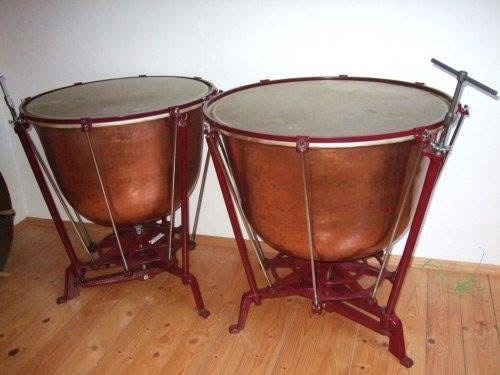
As a final thing, I play this repertoire on my wonderful Jähne & Boruvka drums. They feature the sound, character and volume perfect for this symphony.
How do you play the “Schottish”?, what is your concept for playing Mendelssohn? I am all ears.