Felix Mendelssohn wrote his Symphony No. 4 in A major, op. 90 (“Italian”) between 1832 and 1833 after a “Grand Tour” that took him to Italy between 1830 and 1831. It is the fourth symphony in his catalogue, but the third one in chronological order of composition.
Again, the timpani part is great, but we can find some small details that do not work as they should. We have to know that the 1831 manuscript features up to three different versions for the ending in the first movement and that a second 1834 manuscript exists containing many changes to the second, third and fourth ones. We can find in both documents multiple cuts, erasings, addings, etc. As I told you in my previous article dealing with the “Scottish” symphony, Mendelssohn was very insecure and it was very hard for him to stablish a definitive version of his works. All of this, quite obviously, influences his writing for timpani, which includes many dubious solutions. I strongly recommend you THIS article.
The edits that I made for this symphony have to do not as much with thematical and compositional elements as with trying to polish a rather careless writing. Here you can see the very first page of the manuscript (note that we have not started yet and there are many scratches and changes).
Setting the repetition on the fourth bar is a huge mistake. Figures, rehearsal letters and similar things are set in places where they make musical sense, almost always coinciding with the phrases. This logic helps counting bar rests (and we, as timpanists, have to count many!).
The repetition should be on the third bar, where the phrase starts. Mendelssohn wrote it on the fourth, but it is a total ABSURDITY that no editor has ever corrected to make logical something that makes no sense at all. No edition has thought about it, not even the Bärenreiter by Hogwood has tried to amend this child´s mistake. Of course, if we are to edit this repetition, the one at the end of the exposition has to be moved one bar earlier.
I would have loved to move the repetition in my edition, but I cannot do that for a very simple reason; namely, that change has to be done in all the parts and in the score. If only the timpani part gets edited and a conductor says “let´s go four bars before the repetition”, my entrance, and only my entrance, will be wrong because of its placement. If the change is to be made, it has to be done in ALL the parts (and, obviously, in the score too).
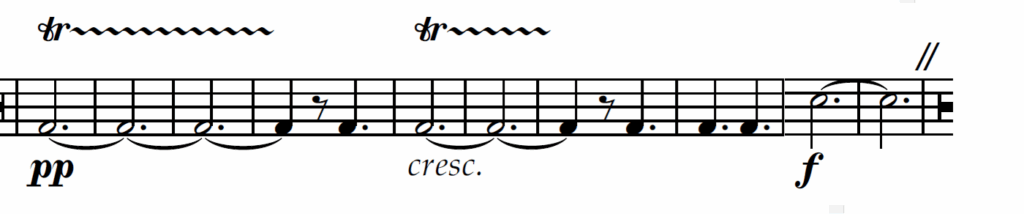
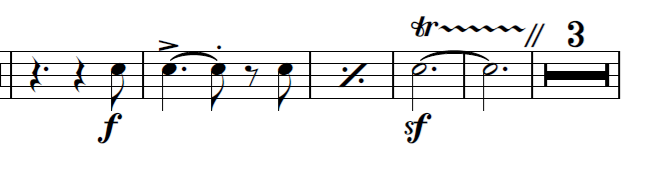
Let us check some examples of the process for my edits. On bar 132 there is an eight-bars roll:
Note that the roll does not perfectly match the rest of the orchestra. I find this more logical and musical, doubling the winds:
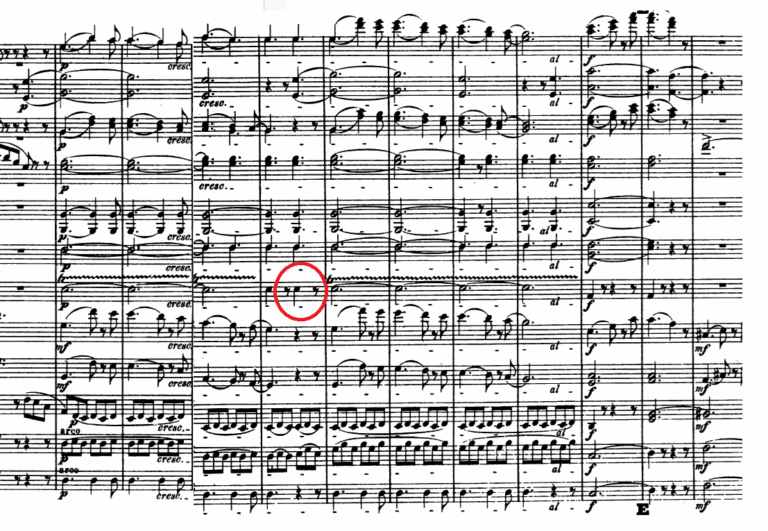
The funny (not Mendelssohn, please excuse my humor) thing is that the composer writes that roll again in the reexposition and, this time yes, he writes the dotted quarter-note on the fourth bar (but not on the last two bars):
As you can see, the writing in two identical passages is not consistent. It is for that reason that I tend to unify criteria and I write that second roll like the first one:
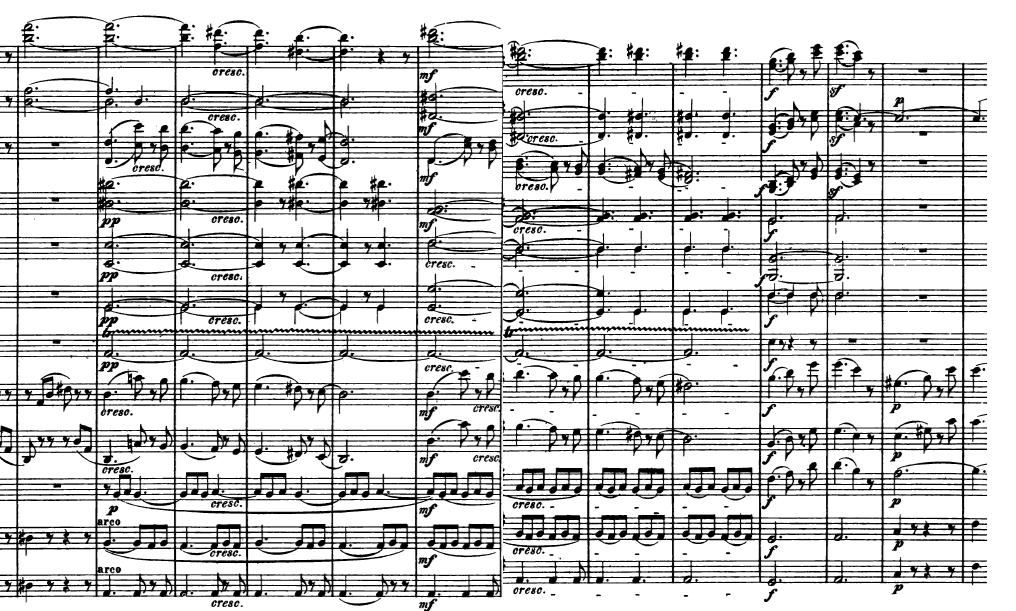
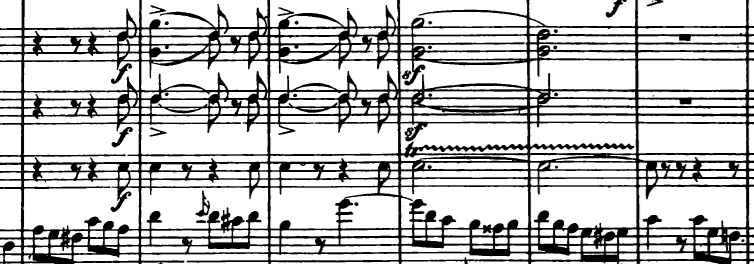
There is nothing that I hate most than composers not writing down phrasings, articulations, dynamics, etc. For centuries, they have treated percussionists/timpanists as if we were not musicians, but mere banggers. Note that we are playing the exact same phrase as the trumpets and French horns are but, while they are provided with plenty of written information, we are lacking everything:
It is for that reason that I am including all the missing information that allows us to play like the instruments that we are doubling:
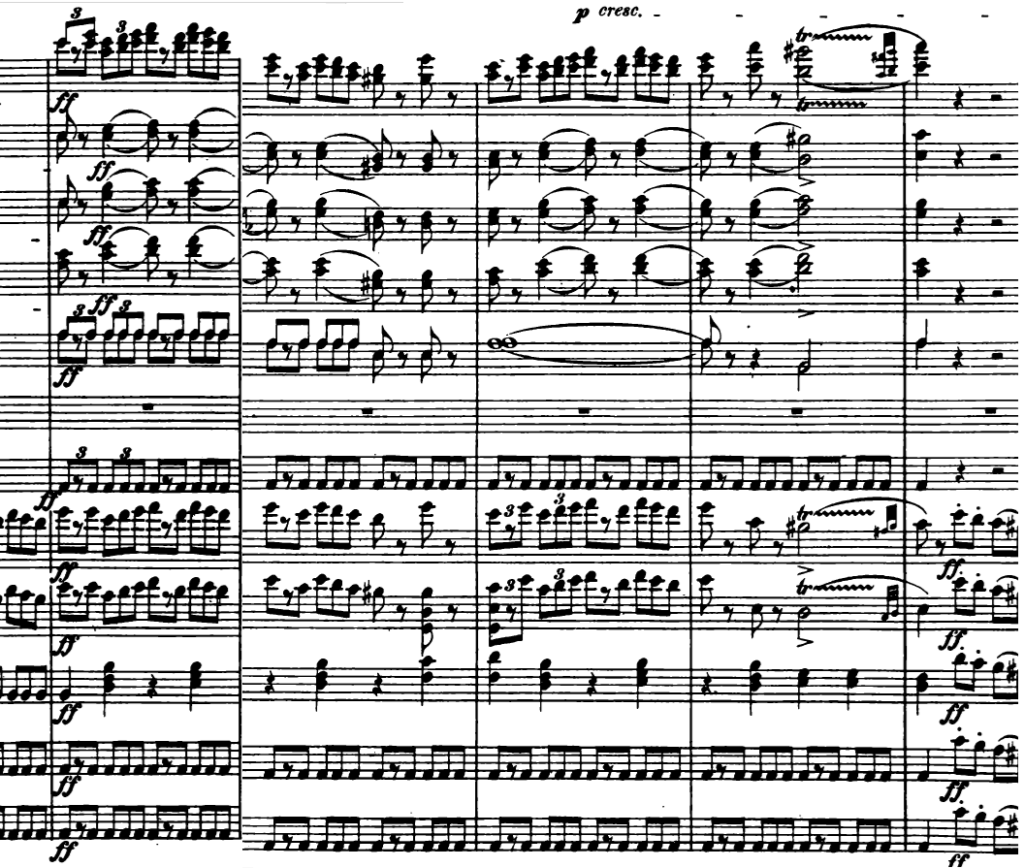
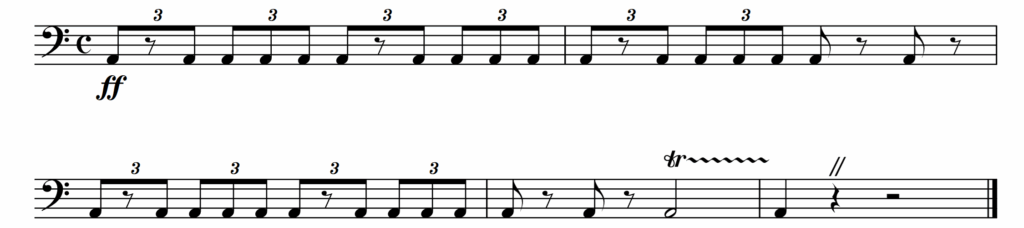
There is a very interesting passage in the saltarello, where we play an ostinato in the form of a dance rhythm together with the low strings (a very similar case to the “Amsterdam” rhythmical pattern in Beethoven #7):
The timpani part is doubled and reinforced by the celli and double basses but, when played as written, my opinion is that it muds the melody. I would have loved to modify it as follows, which perfectly matches the orchestra:
The problem with this passage is that we are playing together with the low strings. If I edit it, the celli and double basses should also edit theirs for consistency and the full effect, but the principals of those sections may not be up for a modification. I have no problem editing when a change affects only the timpani part but, when the changes involve other sections, I must be very careful and more conservative. It is for that reason that I have not included this modification in the saltarello. I could have written it, but playing it would entail a previous agreement with the principals in the celli and double bass sections.
This symphony is plagued with these tiny details. Should you want to know more about the process that I have followed, you just have to chek the conductor´s score, as I have limited my job to bringing in some consistency and to “tidy up” a part that, although excellent, is full with this kind of “stains” that mess the general result.
You can download my edition by clicking the button below:
Please let me repeat what I have already stated in my previous article:
You already know that I love researching and editing but, for that, a deep knowledge is required. Just playing what is written, without thinking deeper musical issues, can be done by anyone. Making MUSIC (which entails going a few steps beyond the mere reading) is hard but, contributing with our own effort, knowledge and passion, we honor best the composer than being just readers (something that any old 386 computer is).
Remember that what is on paper is not absolute truth engraved in bronze. Experience has taught me that we all are humans (yes, even the great composers!), thus prone to making mistakes; slips, wrong transcriptions, misprints and many other mundane issues are present EVERYWHERE when it comes to manuscripts, galleys, tests, editions, etc.
Do not be afraid of making informed decisions. Music is an ephemeral art that vanishes in time. Once our performance is over, also our decisions (right or wrong) vanish with it and, luckily, no one gets hurt because of those decisions (something that would not happen should we were heart surgeons!). As artists, it is not our duty to “feed” the audience with commodities, but rather to make the public uncomfortable so it gets challenged and starts to think (that is why artists are considered dangerous by certain regimes). Challenge yourself, challenge your colleagues and challenge the audience. That is what MUSIC is all about.
You are free to use my edition (it would be great if you could tag me on social media if you do so!). Do not read (anyone can do that), ALWAYS MAKE MUSIC.
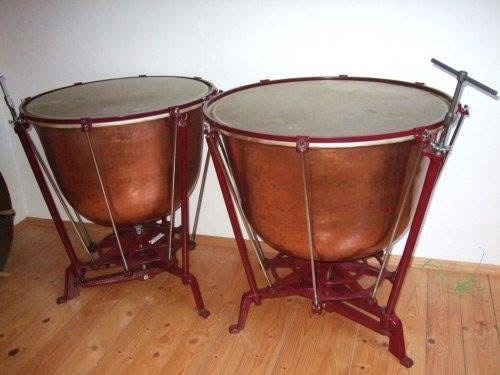
As I said before, I am lucky to play this repertoire on my wonderful Jähne & Boruvka drums. They feature the sound, character and volumen perfect for this symphony.
How do you play the “Italian”?, what is your approach for Mendelssohn? I would love to know your opinions.
…et in Arcadia ego.
© David Valdés