Chinese inmigrants started arriving into the United States around 1820. They did so, following a pure geographical logic, into the East Coast, being San Francisco their port of arrival. They worked on mines (the
Gold Rush in California was at its peak), building the railway from coast to coast and, if we have trust the comics featuring Lucky Luke, they run laundries (I hope you like European comics as much as I do).
Obviously, they brought their traditions, and cymbals were one of them. Already in the first third of the 19th-century, the use of Chinese cymbals is documented to attract people to political rallies. In 1865 the
Civil War ended, and the musicians discharged from the army had to make a living in the civil society. At first, there was a a musician for every single instrument (bass drum, snare drum and cymbals, as in the military bands) but, out of necessity (and to save money), a single player started playing more than one instrument at the same time, and
double-drumming techniques started to be used. Then, the use of pedals and stands that allowed a single percussionist to play all the instruments simultaneously, started shaping what we now know as the drumkit.
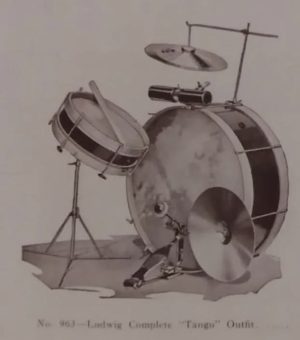
At the beginning of the 20th-century, this is what a drumkit (in fact, that is a trap set) looked like: