We are deep into “The Nutcracker” (P. I. Tchaikovsky) season. This ballet is a tremendously popular work that is played very often during Christmas. The percussion parts are great and the “Trepak” features a very funny part, which is also technical challenge, and that is why it is asked for very often in auditions.
Here we have the first two phrases:
It is the last note, marked in red, that sounds suspicious to me. They are two identical phrases that are played differently and, as you already know, that turns on all the alarms for me.
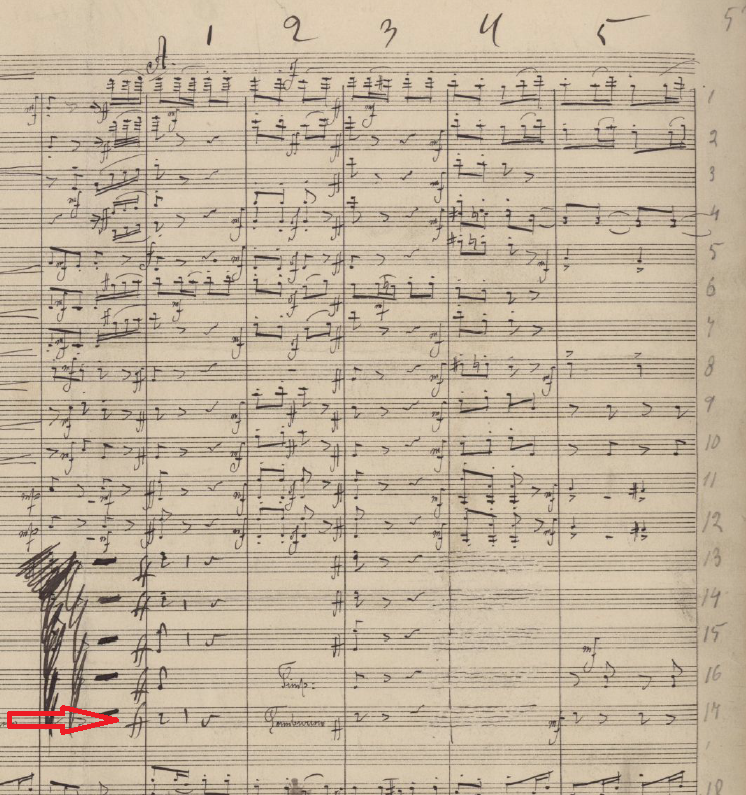
As always, I checked the manuscript. Here is the first phrase:
We can clearly see that it was perfectly copied for the first edition. No problems here. The last bar ends with a lonely note on the strong beat.
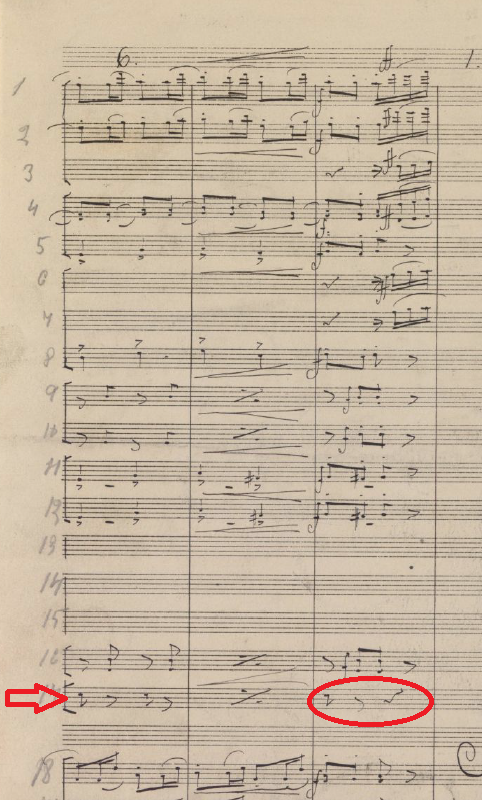
Let us now check the second phrase:
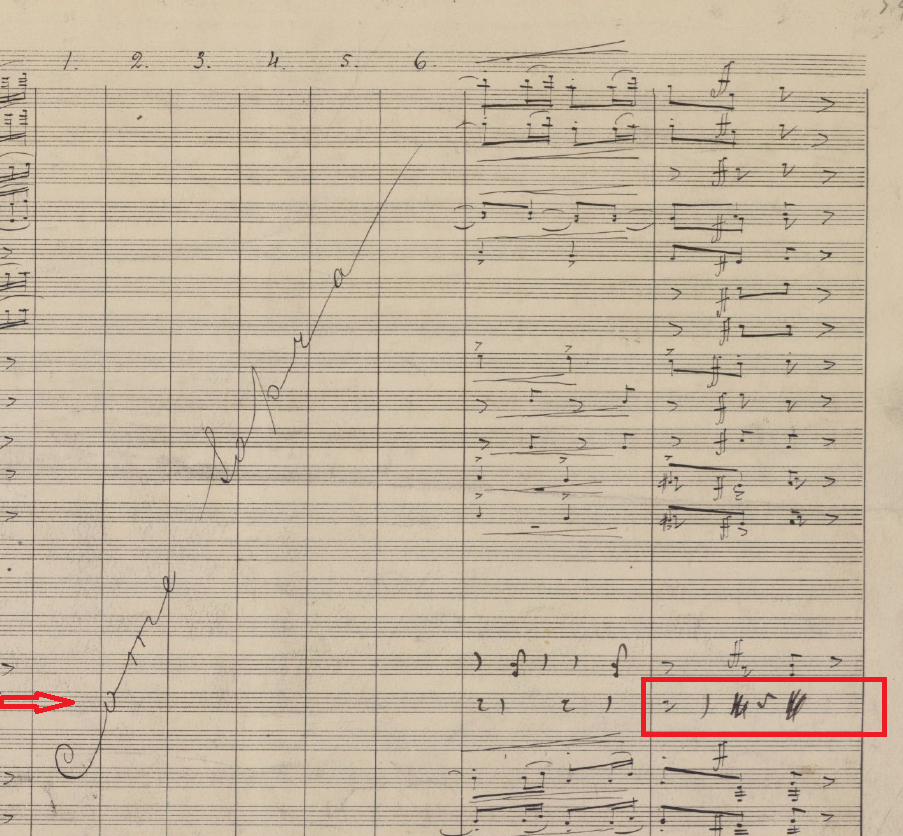
Tchaikovsky was not up for writing too much, so he uses “come sopra” (“as above”), he numbers the bars to be repeated (note that he numbered from 1 to 6 in the first phrase. Those same six bars are to be repeated in the second one) and he only wrote the last two bars. In this case, our friend clearly crossed out two 8th-notes that unmistakenly doubled the timpani part. He then added a quarter-note rest; he converted this last bar of the second phrase to one identical to the last one in the first phrase.
The manuscript is crystal clear (it cannot be more self explanatory), but the first edition (and subsequent ones) transcribed that bar wrongly, making two identical phrases to sound different when they have not to (we have already saw that the manuscript is unappealable).
Because all of the above, my interpretation gets rid of that last note right before B and it is as follows (two identical phrases):
Apart from the fact that the manuscript presents no doubts at all, not playing that last note is an obvious musical decision, as we are dealing with two identical phrases.
But there is more to “Trepak”… I always felt that the last roll starts in the wrong place.
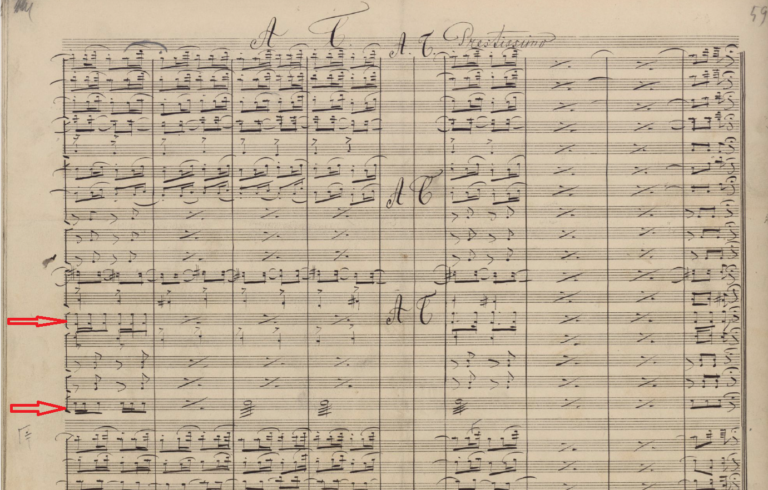
My musical intuition tells me that the roll should start in the Prestissimo, not before. Why? 1) because untill the Prestissimo, the harmonic rhythm goes in 4. It is in the Prestissimo that it changes to 2. The change in color by the tambourine should coincide with formal changes/sections. 2) The trumpets play the exact same rhythm as we do, but they do not change until the Prestissimo. It does not make sense for the trumpets to keep playing the same rhythm for eight bars, changing at Prestissimo, while we start rolling four bars too early. Let us check the manuscript:
Yes, the manuscript and the first edition are consistent, but that is not an obstacle for me to believe that we are in the presence of a mistake, making the start of the roll to be out of place. My opinion is that it should start at Prestissmo, not before (perfectly doubling the rhythmical pattern by the trumpets).
When I play this part, I start rolling four bars later, but you do not have to do so. Play as you consider best (but use all your knowledge to make an informed decision. Do not play at random or stubbornly stick to the ink just because “it is written”).
How do you play “Trepak”? Stay tuned, as I will soon upload videos showing a bunch of techniques for this wonderful number.